Charles Drew (1904-1950) • (blackpast.org)
88888888888888888888888888888888888888888888888888888888888888888888888888888888888
Charles Drew (1904-1950)
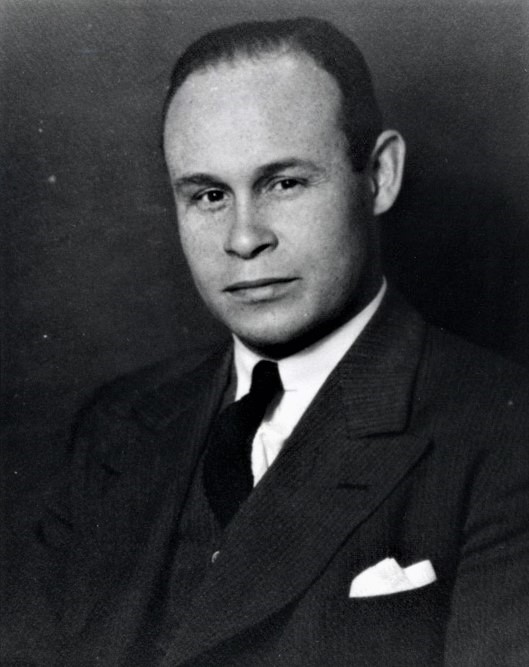
Charles Richard Drew was a medical researcher, surgeon, and the first African American to be appointed as a medical examiner for the American Board of Surgery. His research and work led to the development of processing and storing plasma in blood banks.
Drew was born on June 3, 1904, in Washington, DC. His mother, Nora Rosella Burrell Drew, was the daughter of a European sea captain, and was trained as a schoolteacher. His father, Richard Drew, was a light skinned African American carpet-layer, as well as the secretary and only non-white member of the Carpet, Linoleum, and Soft-Tile Layers Union in the District of Columbia.
Raised in an upper-middle class neighborhood, Drew first attended Stevens Elementary, then Dunbar High School. Drew was an excellent student and athlete, exceeding in four sports, which earned him the James E. Walker Medal, and an athletic scholarship to Amherst College in Massachusetts once he graduated from Dunbar in 1922. He continued to excel in athletics, but the death of his sister and an injury in his senior year changed his focus towards medicine.
Drew earned his AB from Amherst in 1926 and worked as the instructor of biology and chemistry as well as the athletic director at Morgan College (now Morgan State University), before attending McGill University in Montreal, Canada. During his internship at Montreal General Hospital, Drew conducted research that led to correlations between blood transfusions and shock therapy. He was a member of Alpha Omega Alpha, a medical honor society when he received his Master of Surgery and Doctor of Medicine degree in 1933.
After returning to Washington, DC, Drew worked as a pathology instructor at Howard University, before beginning a long career at the Freedman’s Hospital (now Howard University Hospital) as a surgery instructor and surgeon. Drew was awarded a Rockefeller fellowship at Columbia University before working on his doctoral thesis, “Banked Blood: A Study on Blood Preservation,” at Presbyterian Hospital in New York City.
While at a conference, Drew met Minnie Lenore Robbins, and the two married in 1939. The couple had three daughters and a son. When he completed his studies at Columbia in 1940, Drew became the first African American in the United States to earn a Doctor of Science in Medicine degree. He was then recruited to set up and administer protocols for blood collection, storage, and preservation when the US entered World War II. He moved to New York City to serve as the medical director for the United States Blood to Britain Project, which provided aid to UK soldiers and citizens.
In 1941, Drew became the Director of the first American Red Cross blood bank. In that role he developed bloodmobiles for mobile donations. He resigned in 1942 when African American blood continued to be segregated despite his own scientific research that proved every person had the same type of blood plasma and thus transfusions could be administered to anyone regardless of the blood type or race of the donor. Drew returned to work at both Howard University and the Freedmen’s Hospital. While there he was awarded the Spingarn medal by the NAACP in 1944, and two honorary doctorate degrees.
On April 1, 1950, Drew and three of his resident physicians began traveling from Washington, DC. to Tuskegee Institute to attend a conference. Drew was driving in North Carolina and fell asleep at the wheel. The car ran off the road and he suffered serious injuries when he was thrown from the vehicle, and it rolled over him. Drew and the other inured passenger, John Ford, were taken to Alamance General Hospital, a “whites only” hospital despite their race. Drew died from his injuries at the hospital while Ford recovered. The Drew family later wrote letters to the attending physicians thanking them for their attempt to save the surgeon’s life. Charles Drew was only 45 when he died in North Carolina.
88888888888888888888888888888888888888888888888888888888888888888888888888888888888
88888888888888888888888888888888888888888888888888888888888888888888888888888888888
Charles Richard Drew (June 3, 1904 – April 1, 1950) was an American surgeon and medical researcher. He researched in the field of blood transfusions, developing improved techniques for blood storage, and applied his expert knowledge to developing large-scale blood banks early in World War II. This allowed medics to save thousands of Allied forces' lives during the war.[1] As the most prominent African American in the field, Drew protested against the practice of racial segregation in the donation of blood, as it lacked scientific foundation, and resigned his position with the American Red Cross, which maintained the policy until 1950.[2]
.png)
Drew was born in 1904 into an African-American middle-class family in Washington, D.C.[3] His father, Richard, was a carpet layer[4] and his mother, Nora Burrell, trained as a teacher.[5] Drew and three (two sisters, one brother) of his four younger siblings (three sisters and one brother total) grew up in Washington's largely middle-class and interracial Foggy Bottom neighborhood.[5][3] From a young age Drew began work as a newspaper boy in his neighborhood, daily helping deliver over a thousand newspapers to his neighbors. Drew attended Washington's Dunbar High School which was well known for its equality and opportunities for all, despite the racial climate at the time.[6] From 1920 until his marriage in 1939, Drew's permanent address was in Arlington County, Virginia,[7] although he graduated from Washington's Dunbar High School in 1922 and resided elsewhere during that period of time.[5][8]
Drew won an athletics scholarship to Amherst College in Massachusetts,[9] where he played on the football as well as the track and field team, and later graduated in 1926.[6] After college, Drew spent two years (1926–1928) as a professor of chemistry and biology, the first athletic director, and football coach at the historically black private Morgan College in Baltimore, Maryland, to earn the money to pay for medical school.[5][10][11]
For his medical career Drew applied to Howard University, Harvard Medical School and later McGill University.[6] Drew lacked some prerequisites for Howard University, and Harvard wanted to defer him a year, so to begin medical school promptly, Drew decided to attend McGill's medical school in Montreal, Canada.[12]
It was during this stage in his medical journey that Drew worked with John Beattie, who was conducting research regarding the potential correlations between blood transfusions and shock therapy.[13] Shock occurs as the amount of blood in the body rapidly declines which can be due to a variety of factors such as a wound or lack of fluids (dehydration). As the body goes into shock, both blood pressure and body temperature decrease which then causes a lack of blood flow and a loss of oxygen in the body's tissues and cells. Eventually, it became clear that transfusions were the solution to treating victims of shock, but at the time there was no successful method of transportation or mass storage of blood, leaving transfusions to be extremely limited to location.[13]
At McGill, he achieved membership in Alpha Omega Alpha, a scholastic honor society for medical students, ranked second in his graduating class of 127 students, and received the standard Doctor of Medicine and Master of Surgery degree awarded by the McGill University Faculty of Medicine in 1933.[7][9]

Drew's first appointment as a faculty instructor was for pathology at Howard University from 1935 to 1936.[14] He then joined Freedman's Hospital, a federally operated facility associated with Howard University, as an instructor in surgery and an assistant surgeon. In 1938, Drew began graduate work at Columbia University in New York City on the award of a two-year Rockefeller fellowship in surgery. He then began postgraduate work, earning his Doctor of Science at Surgery at Columbia University. He spent time doing research at Columbia's Presbyterian Hospital and wrote a doctoral thesis, "Banked Blood: A Study on Blood Preservation," based on an exhaustive study of blood preservation techniques.[14] It was through this blood preservation research where Drew realized blood plasma was able to be preserved, two months,[6] longer through de-liquification, or the separation of liquid blood from the cells. When ready for use the plasma would then be able to return to its original state via reconstitution.[15] This thesis earned him his Doctor of Science in Medicine degree in 1940, becoming the first African American to do so.[12][16] The District of Columbia chapter of the American Medical Association allowed only white doctors to join, consequently "... Drew died without ever being accepted for membership in the AMA."[17]
In late 1940, before the U.S. entered World War II and just after earning his doctorate, Drew was recruited by John Scudder to help set up and administer an early prototype program for blood storage and preservation. Here Drew was able to apply his thesis to aid in the blood preservation and transportation. He was to collect, test, and transport large quantities of blood plasma for distribution in the United Kingdom.[18] Drew understood that plasma extraction from blood required both centrifugation and liquid extraction. Each extraction was conducted under controlled conditions to eliminate risk of contamination. Air concealment, ultraviolet light and Merthiolate were all used to mitigate the possibility of plasma contamination.[9]
_(4645104328).jpg)
Drew went to New York City as the medical director of the United States' Blood for Britain project. It was here that Drew helped set the standard for other hospitals donating blood plasma to Britain by ensuring clean transfusions along with proper aseptic technique to ensure viable plasma dispersals were sent to Britain.[12] The Blood for Britain project was a project to aid British soldiers and civilians by giving U.S. blood to the United Kingdom.
Drew created a central location for the blood collection process where donors could go to give blood. He made sure all blood plasma was tested before it was shipped out. He ensured that only skilled personnel handled blood plasma to avoid the possibility of contamination. The Blood for Britain program operated successfully for five months, with total collections of almost 15,000 people donating blood, and with over 5,500 vials of blood plasma.[18] As a result, the Blood Transfusion Betterment Association applauded Drew for his work.
Drew's work led to his appointment as director of the first American Red Cross Blood Bank in February 1941. He also invented what would be later known as bloodmobiles, mobile donation stations that could collect the blood and refrigerate it; this allowed for greater mobility in terms of transportation and increased prospective donations.[3] The blood bank supplied blood to the U.S. Army and Navy, who initially rejected the blood of African-Americans and later accepted it only if it were stored separately from that of Whites.[3] Drew objected to the exclusion of African-Americans' blood from plasma-supply networks, and in 1942 he resigned in protest.[19]
In 1941, Drew's distinction in his profession was recognized when he became the first African-American surgeon selected to serve as an examiner on the American Board of Surgery.[20]
Drew had a lengthy research and teaching career, returning to Freedman's Hospital and Howard University as a surgeon and professor of medicine in 1942. He was awarded the Spingarn Medal by the NAACP in 1944 for his work on the British and American projects. He was given an honorary doctor of science degree, first by Virginia State College in 1945 then by Amherst in 1947.[19]

In 1939, Drew married Minnie Lenore Robbins, a professor of home economics at Spelman College in Atlanta, Georgia, whom he had met earlier during that year.[21] They had three daughters and a son.[5] His daughter Charlene Drew Jarvis served on Council of the District of Columbia from 1979 to 2000, was the president of Southeastern University from 1996 until 2009, and was a president of the District of Columbia Chamber of Commerce.[22]

Beginning in 1939, Drew traveled to Tuskegee, Alabama, to attend the annual free clinic at the John A. Andrew Memorial Hospital.[23] For the 1950 Tuskegee clinic, Drew drove along with three other black physicians. Drew was driving around 8 a.m. on April 1. Still fatigued from spending the night before in the operating theater, he lost control of the vehicle. After careening into a field, the car somersaulted three times. The three other physicians sustained minor injuries. Drew was trapped with severe wounds; his foot had become wedged beneath the brake pedal.
When reached by emergency technicians, he was in shock and barely alive due to severe leg injuries. Drew was taken to Alamance General Hospital in Burlington, North Carolina.[24] He was pronounced dead a half hour after he first received medical attention. Drew's funeral was held on April 5, 1950, at the Nineteenth Street Baptist Church in Washington, D.C.
Despite a popular myth to the contrary, once repeated on an episode ("Dear Dad... Three") of the hit TV series M*A*S*H and in the novels Carrion Comfort and The 480, Drew's death was not the result of his having been refused hospital access because of his race. According to John Ford, one of the passengers in Drew's car, Drew's injuries were so severe that virtually nothing could have been done to save him. Ford added that a blood transfusion might have actually killed Drew sooner.[24][25][26] This myth spread, however, because it was not then uncommon for black people to be refused treatment because there were not enough "Negro beds" available or the nearest hospital only serviced whites.[27]

2012
- In 1976, the National Park Service designated the Charles Richard Drew House in Arlington County, Virginia, as a National Historic Landmark in response to a nomination by the Afro-American Bicentennial Corporation.[7]
- In 1981, the United States Postal Service issued a 35¢ postage stamp in its Great Americans series to honor Drew.
- Charles Richard Drew Memorial Bridge, spanning the Edgewood and Brookland neighborhoods in Washington, D.C.[28]
- USNS Charles Drew, a dry cargo ship of the United States Navy
- Parc Charles-Drew, in Le Sud-Ouest, Montreal, Quebec, Canada
- In 2002, scholar Molefi Kete Asante listed Drew as one of the 100 Greatest African Americans.[29]
Numerous schools and health-related facilities, as well as other institutions, have been named in honor of Drew, including the Martin Luther King Jr./Drew Medical Center in Los Angeles.
- In 1966, the Charles R. Drew Postgraduate Medical School was incorporated in California and was named in his honor. This later became the Charles R. Drew University of Medicine and Science.
- Charles Drew Health Center, Omaha, Nebraska[30]
- Charles Drew Science Enrichment Laboratory, Michigan State University, East Lansing, Michigan[31]
- Charles Drew Health Foundation, East Palo Alto, California, 1960s–2000, was the community's only clinic for decades.
- Charles Drew Community Health Center, located in Burlington, NC near the site of the old Alamance County hospital.
- Charles Drew Pre-Health Society, University of Rochester
- Charles R Drew Wellness Center in Columbia, South Carolina[32]
- Dr. Charles Drew Red Cross Blood and Platelet Donation Center in Washington D.C.[33]
- Charles R. Drew Hall, an all-male freshman dorm at Howard University, Washington D.C.[34]
- Charles Drew Memorial Cultural House, residence at Amherst College, his alma mater[35]
- Charles Drew Premedical Society at Columbia University, New York[36]

- Charles R. Drew Middle School & Magnet school for the gifted, opened 1966 Los Angeles Unified School District Charles R. Drew Middle School Archived 2021-06-02 at the Wayback Machine
- Charles R. Drew Middle School Lincoln, Alabama operated by Talladega County Schools
- Charles R. Drew Junior High School, Detroit, Michigan
- Dr. Charles R. Drew Science Magnet School, Buffalo, NY
- Charles R. Drew Elementary School, Miami Beach[37] and Pompano Beach, Florida[38]
- Bluford Drew Jemison S.T.E.M Academy, Baltimore[39] (closed in 2013)[40]
- Bluford Drew Jemison STEM Academy West, a Middle/High School in Baltimore, Maryland
- Dr. Charles R. Drew Elementary School, Colesville, Maryland[41]
- Charles Drew Elementary School, Washington, DC
- Charles R. Drew Elementary School, Arlington, Virginia[42][43]
- Dr. Charles Drew Elementary School, New Orleans, LA
- Charles R. Drew Charter School opened in August 2000 as the first charter school in Atlanta, Georgia
- Dr. Charles Drew Academy, Ecorse, Michigan
- Drew Academy, Houston, Texas Aldine ISD[44]
- Charles R. Drew Intermediate School, Crosby, Texas
- Dr. Charles Drew Elementary School, San Francisco, Ca.
- Charles Richard Drew Intermediate School / Charles Richard Drew Educational Campus, Bronx, New York[45]
Notes
- ^ "Patent For Preserving Blood Issued November 10, 1942; Washingtonian's invention made blood bank possible" (Press release). Brigid Quinn, United States Patent and Trademark Office. November 9, 2001. Archived from the original on February 11, 2009. Retrieved February 3, 2009.
- ^ Inventions, Mary Bellis Inventions Expert Mary Bellis covered; films, inventors for ThoughtCo for 18 years She is known for her independent; documentaries; Alex, including one about; Bellis, er Graham Bell our editorial process Mary. "All About the Inventor of the Blood Bank". ThoughtCo. Retrieved 2021-05-06.
- ^ a b c d "The Father of Blood Banking: Dr. Charles R. Drew". San Diego Blood Bank. January 31, 2019. Retrieved May 19, 2023.
- ^ "Fifteenth Census of the United States (1930) [database on-line], Arlington Magisterial District, Arlington County, Virginia, Enumeration District: 7–11, Page: 6B, Line: 69, household of Richard T. Drew". United States: The Generations Network. April 14, 1930. Retrieved August 15, 2013.
- ^ a b c d e "The Charles R. Drew Papers". U.S. National Library of Medicine. Retrieved August 25, 2012.
- ^ a b c d Tan, Siang Yong; Merritt, Christopher (2017). "Charles Richard Drew (1904–1950): Father of blood banking". Singapore Medical Journal. 58 (10): 593–594. doi:10.11622/smedj.2017099. ISSN 0037-5675. PMC 5651504. PMID 29119194.
- ^ a b c (1) "Charles Richard Drew House". National Historic Landmark summary listing. National Park Service. Archived from the original on December 31, 2007. Retrieved April 11, 2008.
(2) Graves, Lynne Gomez, Historical Projects Director, Afro-American Bicentennial Corporation (February 2, 1976). "National Register of Historic Places Inventory—Nomination Form: Charles Richard Drew House". National Park Service. Archived from the original (pdf) on January 17, 2019. Retrieved January 17, 2019.{{cite journal}}: Cite journal requires|journal=(help) and "Accompanying 4 photos, exterior, from 1920 and 1976". National Park Service. Archived from the original on January 17, 2019. Retrieved January 17, 2019. - ^ (1) Blitz, Matt (February 20, 2017). "Charles Drew Lived Here". Arlington Magazine. Archived from the original on February 4, 2019. Retrieved February 4, 2019 – via GTexcel.
(2) Drew, Charles B. (April 7, 1995). "Stranger Than Fact". The New York Times. Retrieved August 25, 2012. - ^ a b c "Charles Richard Drew". American Chemical Society. Retrieved May 11, 2021.
- ^ "Former Morgan Professor Dr. Charles Drew Inducted into National Inventors Hall of Fame". Morgan State University. May 11, 2015. Retrieved November 20, 2018.
- ^ "Morgan State Bears Hall of Fame". Morgan State Bears football team. Retrieved November 20, 2018.
- ^ a b c "Biographical Overview". Charles R. Drew – Profiles in Science. March 12, 2019. Retrieved May 11, 2021.
- ^ a b "Education and Early Medical Career, 1922–1938". Charles R. Drew – Profiles in Science. March 12, 2019. Retrieved May 11, 2021.
- ^ a b "Charles R. Drew, MD | Charles R. Drew University of Medicine and Science". www.cdrewu.edu. Retrieved May 11, 2021.
- ^ "Charles Drew". Biography. September 3, 2020. Retrieved May 11, 2021.
- ^ Drew, Charles R. (May 31, 1940). "Letter from Charles R. Drew to Edwin B. Henderson" (PDF). Bethesda, Maryland: National Institutes of Health: National Library of Medicine. Archived from the original (PDF) on January 18, 2019. Retrieved January 17, 2019.
On Tuesday I get the degree of Doctor of Science in Medicine.
- ^ Wynes, Charles E. (1988). Charles Richard Drew: The Man and the Myth. Internet Archive. University of Illinois Press (Urbana). p. 84. ISBN 978-0252015519.
- ^ a b Starr, Douglas P. (2000). Blood: An Epic History of Medicine and Commerce. New York: Quill. ISBN 0688176496.
- ^ a b "Charles R. Drew, MD | Charles R. Drew University of Medicine and Science".
- ^ "The Charles R. Drew Papers – "My Chief Interest Was and Is Surgery" – Howard University, 1941–1950". Profiles in Science. National Library of Medicine. Retrieved September 17, 2013. Other sources put the date as late as 1943, e.g., PBS's Red Gold.
- ^ Biography by United States National Library of Medicine
- ^ (1) "Ward 4 Member of the Council of the District of Columbia". District of Columbia Board of Elections and Ethics. Archived from the original on July 16, 2008.
(2) Hallman, Lesly. "Legacy and Memory of Charles Drew Lives On". American Red Cross. Archived from the original on November 27, 2004. Retrieved June 4, 2004.
(3) "Board of Trustees: The Honorable Charlene Drew Jarvis, PhD, Secretary". The National Health Museum. January 2007. Archived from the original on August 23, 2007. Retrieved April 1, 2007. - ^ Schraff, Anne E. (2003), Charles Drew: Pioneer in Medicine, Enslow Publishing, Inc.
- ^ a b "Question of the Month: The Truth About the Death of Charles Drew". Jim Crow Museum of Racist Memorabilia. June 2004. Archived from the original on December 12, 2013. Retrieved November 19, 2013.
- ^ "Did the black doctor who invented blood plasma die because white doctors wouldn't treat him?". The Straight Dope. November 1989. Retrieved February 18, 2014.
- ^ Sluby, Patricia Carter (2004). The Inventive Spirit of African Americans: Patented Ingenuity. Greenwood Publishing Group. pp. 112–113. ISBN 978-0275966744. OCLC 260101002. Retrieved February 18, 2014.
- ^ Sternberg, Steve (July 29, 2015). "Desegregation: The Hidden Legacy of Medicare". U.S. News & World Report. Retrieved November 19, 2021.
- ^ Charles Richard Drew Memorial Bridge at The Historical Marker Database.
- ^ Asante, Molefi Kete (2002). 100 Greatest African Americans: A Biographical Encyclopedia. Amherst, New York: Prometheus Books. ISBN 978-1573929639
- ^ Charles Drew Health Center
- ^ About Dr. Charles R. Drew Archived 2006-09-01 at the Wayback Machine, Charles Drew Charles Drew Science Enrichment Laboratory, Michigan State University
- ^ Charles R. Drew Wellness Center Archived June 5, 2009, at the Wayback Machine, City of Columbia.
- ^ "Washington D.C. American Red Cross". redcrossblood.org. Retrieved May 19, 2020.
- ^ Charles R. Drew Hall Archived 2006-08-27 at the Wayback Machine, Howard University
- ^ "Amherst College page on the house". Archived from the original on August 10, 2015.
- ^ "Charles Drew Premedical Society". columbia.edu. Retrieved December 26, 2017.
- ^ Charles R. Drew Elementary School, Miami-Dade County Public Schools
- ^ Dr. Charles R. Drew Elementary School Archived June 4, 2006, at the Wayback Machine, Broward County Public Schools
- ^ "Frequently Asked Questions". Bluford Drew Jemison S.T.E.M. Academy. Archived from the original on September 14, 2010. Retrieved March 22, 2013.
- ^ Green, Erica L. (June 11, 2013). "City school board approves three new charters". The Baltimore Sun. Baltimore. Archived from the original on February 21, 2019. Retrieved February 20, 2019.
- ^ Dr. Charles R. Drew Elementary School Archived 2019-05-22 at the Wayback Machine, Montgomery County Public Schools
- ^ "Dr. Charles R. Drew Elementary School". Arlington Public Schools. Archived from the original on January 18, 2021. Retrieved February 22, 2021.
- ^ "Welcome to Drew". Arlington Public Schools. Archived from the original on June 7, 2017. Retrieved February 22, 2021.
- ^ Fehling, Leticia. "Drew Academy".
- ^ "NYC Department of Education Maps". schools.nyc.gov. NYC Department of Education. Retrieved May 19, 2023.
Further reading
- Love, Spencie (1996), One Blood: The Death and Resurrection of Charles R. Drew, Chapel Hill: University of North Carolina Press, (1997 reprint) ISBN 0807846821
- Organ, Claude H., editor (1987), A Century of Black Surgeons: The USA Experience, Transcript Press, Vol. I, Asa G. Yancey, Sr., Chapter 2: The Life Of Charles R. Drew, MD, ISBN 0961738006.
- Schraff, Anne E. (2003), Dr. Charles Drew: Blood Bank Innovator, Enslow, ISBN 0766021173
- Wynes, Charles E. (1988), Charles Richard Drew: The Man and the Myth, University of Illinois Press, ISBN 0252015517
